From Middle-earth to Mars: 7 Movie Locations That Are Even Better in Real Life
There is a peculiar moment that occurs when you visit a famous movie location.
Your brain knows perfectly well that you are standing in Scotland, Jordan or rural New Zealand. Yet another part of it is quietly insisting that a steam train to Hogwarts will arrive shortly, dinosaurs may be somewhere beyond the next ridge, and turning a corner in Petra could lead to the Holy Grail.
Cinema does this exceptionally well. It borrows real places, gives them imaginary lives and then returns them to us slightly altered.
The best film locations, however, are not interesting merely because somebody once shouted “Action” there. They are places worth crossing an ocean for even after the cameras have disappeared.
These seven qualify.
Hobbiton, New Zealand: The Film Set Nobody Had the Heart to Remove
The Shire looks suspiciously comfortable for somewhere inhabited by people routinely dragged into battles over magical jewellery.
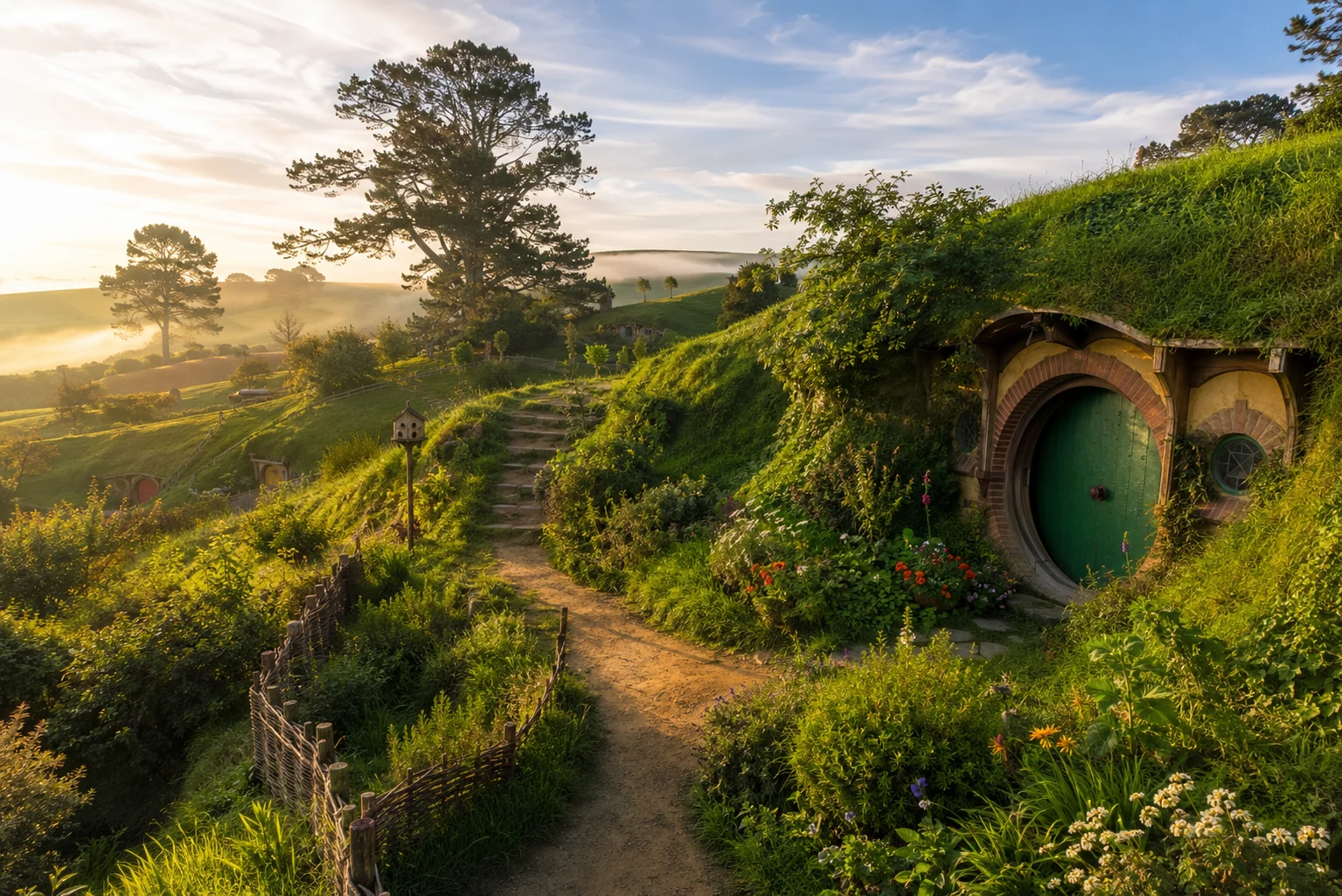
Green hills roll across the Waikato countryside. Tiny paths wander between circular doors. Laundry hangs outside Hobbit Holes. There is a mill, a stone bridge and, importantly, a pub.
Peter Jackson's Lord of the Rings films used more than 150 locations around New Zealand, but the farmland near Matamata became the most recognisable. The Hobbiton set was later rebuilt for The Hobbit trilogy and, unlike many temporary movie sets, made permanent.
That permanence is what makes Hobbiton unusual. You aren't staring at a field while a guide explains that “the castle was approximately over there before they demolished it.” The village exists around you.
Today's guided visit passes Bag End, the lakeside village and the Green Dragon Inn, with interiors at Bagshot Row extending the experience beyond façade-peering. Tourism New Zealand currently lists the standard experience from NZ$130 for adults, and tours operate year-round.
Why it earns the journey: even travellers with only moderate Tolkien enthusiasm can appreciate the obsessive production design and Waikato landscape.
The danger is emerging several hours later with strong opinions about circular architecture.
Petra, Jordan: Indiana Jones Was the Least Interesting Thing to Happen Here
Few film entrances have been more effective.
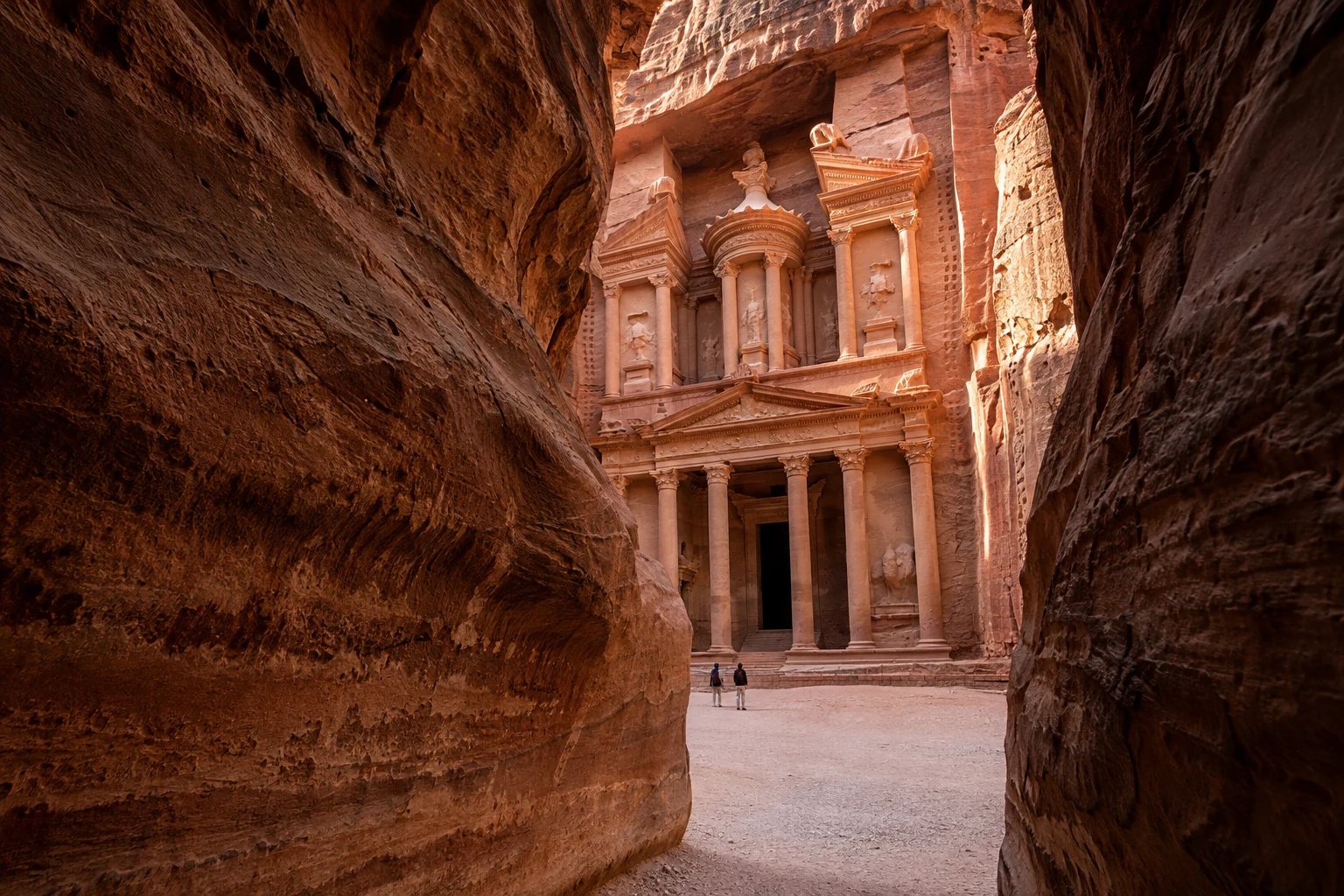
Indiana Jones rides through a narrow canyon and suddenly the façade of an enormous temple appears between the cliffs. In Indiana Jones and the Last Crusade, this is where one might reasonably expect to find the Holy Grail.
In reality, it is Al-Khazneh—the Treasury—at Petra.
And reality is considerably more interesting.
Petra was a major Nabataean caravan city, positioned between Arabia, Egypt and the Mediterranean world. Its builders created tombs, temples and an extraordinarily sophisticated system of channels, cisterns and reservoirs capable of sustaining a substantial settlement in an arid landscape. UNESCO has protected Petra as a World Heritage Site since 1985.
The famous Treasury is therefore not an Indiana Jones set.
Indiana Jones merely borrowed it.
That distinction changes the experience of visiting. Walk the Siq early in the morning, when the rock walls still hold some shadow, and the gradual reveal of Al-Khazneh remains remarkably theatrical without requiring either Harrison Ford or an orchestral soundtrack.
Then keep walking.
One of the most common mistakes at Petra is behaving as though the Treasury is the destination. The archaeological site spreads far beyond it, through tombs, temples, colonnaded streets and towards the immense rock-cut Monastery.
The movie got its dramatic entrance right.
It merely underestimated what came afterwards.
Glenfinnan, Scotland: Waiting for the Hogwarts Express
Scotland possessed mountains, mist, lochs and ruined castles long before Harry Potter arrived.
The films simply organised them into a remarkably successful marketing campaign.
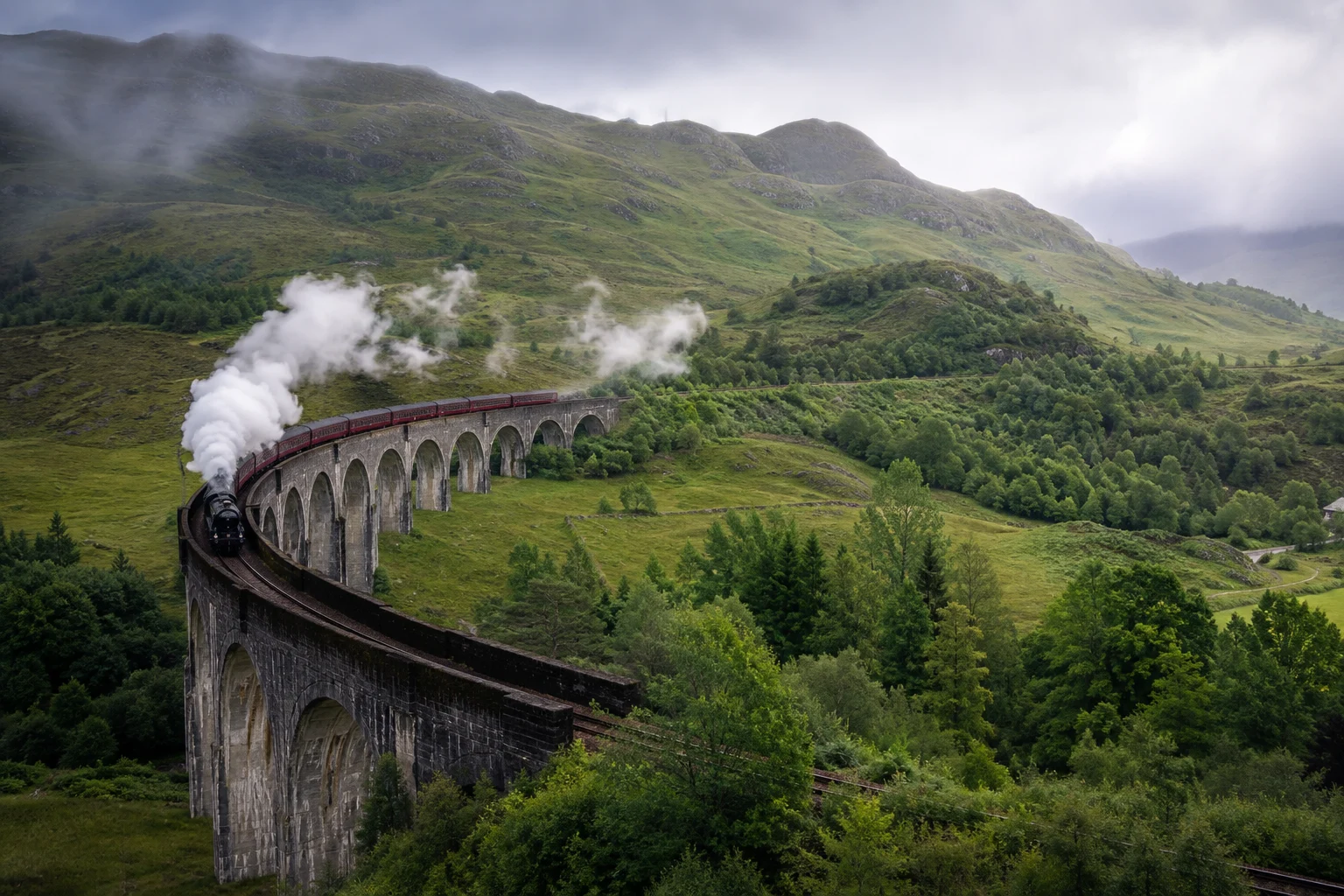
Perhaps the most recognisable location is Glenfinnan Viaduct, whose curving arches carried the Hogwarts Express across the screen in several films. Loch Shiel and the surrounding Highlands also appeared throughout the series.
Today, visitors gather on hillside viewpoints waiting for the Jacobite steam train to cross.
There is something faintly ridiculous about several hundred adults becoming visibly excited by the scheduled appearance of public transport.
Then the steam appears between the hills and everyone understands.
The more interesting story, however, predates Hogwarts by centuries. Glenfinnan is also where Bonnie Prince Charlie raised his standard in 1745 at the beginning of the Jacobite Rising, an ultimately disastrous attempt to restore the Stuarts to the British throne.
Come for cinematic Scotland. Stay because the real history refuses to remain in the background.
Practical note: if seeing the steam train cross matters to you, plan around the published Jacobite timetable rather than arriving randomly and expecting Britain to provide spontaneous steam-powered theatre.
Skellig Michael, Ireland: Star Wars Found Somewhere Already Otherworldly
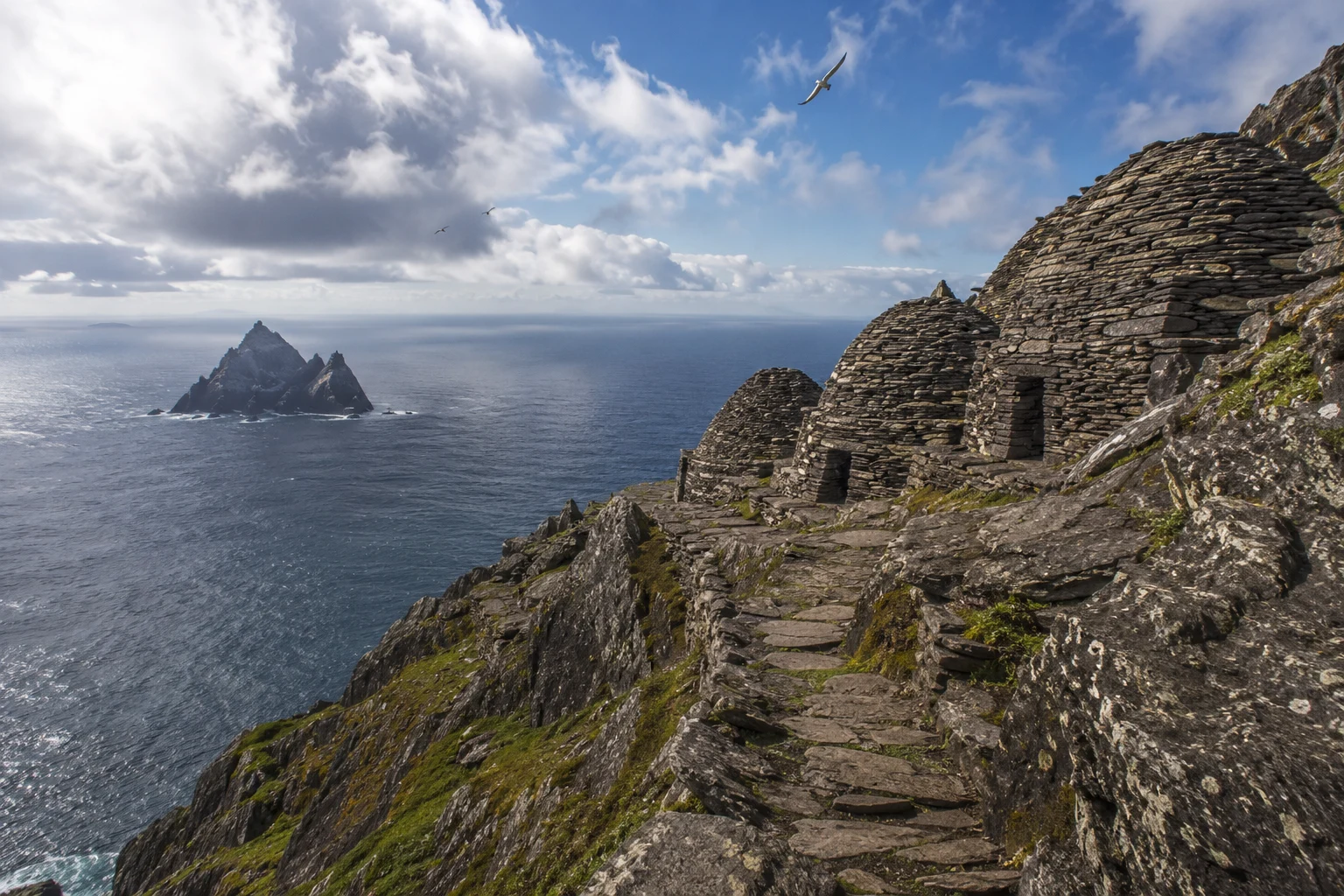
Production designers spend fortunes making planets look ancient, remote and inhospitable.
Ireland had already built one.
Skellig Michael rises sharply from the Atlantic off County Kerry, its stone stairways climbing towards the remains of an early Christian monastic settlement. Monks were living on this isolated rock more than a millennium before anyone imagined Luke Skywalker.
The island became Ahch-To in the newer Star Wars films, first appearing in The Force Awakens. Because Skellig Michael is a protected UNESCO World Heritage Site, filming there was restricted; additional stretches of Ireland's Atlantic coastline subsequently doubled for the fictional island.
This is precisely why Skellig works so well in the article.
It reverses the normal relationship between location and movie. The filmmakers did not make the island look extraordinary. They mostly had to avoid getting in its way.
Visiting is considerably less straightforward than walking onto a studio tour. Access involves a boat journey from the Kerry coast, landings are seasonal and weather-dependent, and Atlantic conditions occasionally respond to carefully made holiday plans with complete indifference.
That difficulty is part of the place.
You don't arrive feeling as though you have visited a set.
You arrive wondering how medieval monks managed it without waterproof hiking gear.
Wadi Rum, Jordan: Hollywood's Favourite Substitute Planet
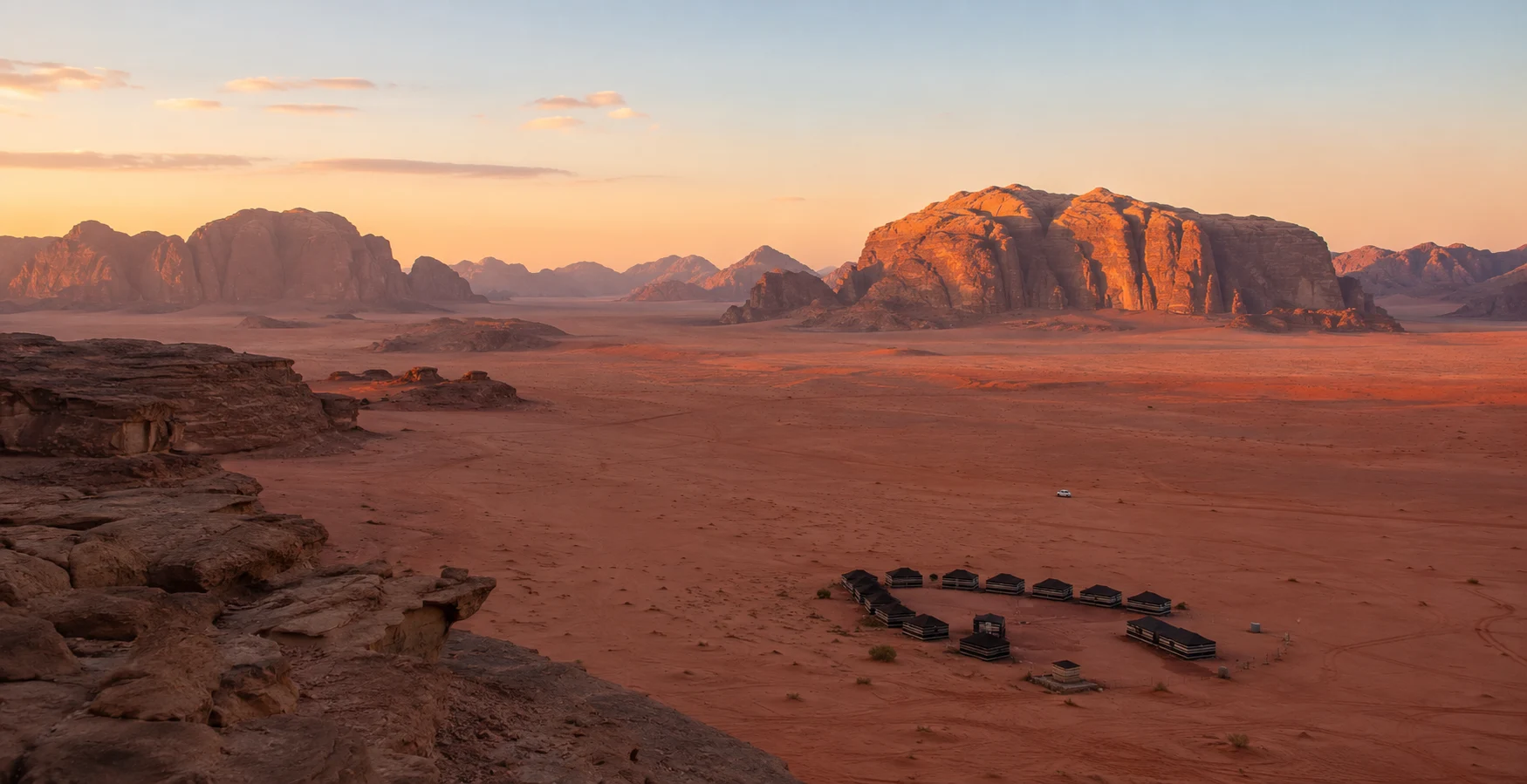
Apparently, if mankind ever colonises Mars, some travellers may feel unexpectedly homesick for Jordan.
Wadi Rum has repeatedly been asked to impersonate other worlds on screen. Its sandstone massifs, enormous desert horizons and red earth have appeared as extraterrestrial landscapes, including Mars-like settings; Jordan's tourism authorities explicitly note its long Hollywood career, while the Dune production also filmed in the region.
It makes sense.
Very little visual clutter tells you which century—or indeed planet—you are standing on.
Yet describing Wadi Rum only through movies would miss the point. This is a protected desert landscape with a far older human history, including traces of Nabataean presence and generations of Bedouin life. Wadi Rum has been on UNESCO's World Heritage List since 2011.
Spend a night rather than racing through on a location-spotting exercise.
The desert becomes much more interesting once the engines stop. Mountains turn black against the evening sky; dinner fires appear beside camps; and after dark the stars explain why filmmakers keep returning whenever Earth is required to look slightly less like Earth.
Kualoa Ranch, Hawaiʻi: The Valley Where Dinosaurs Refuse to Die
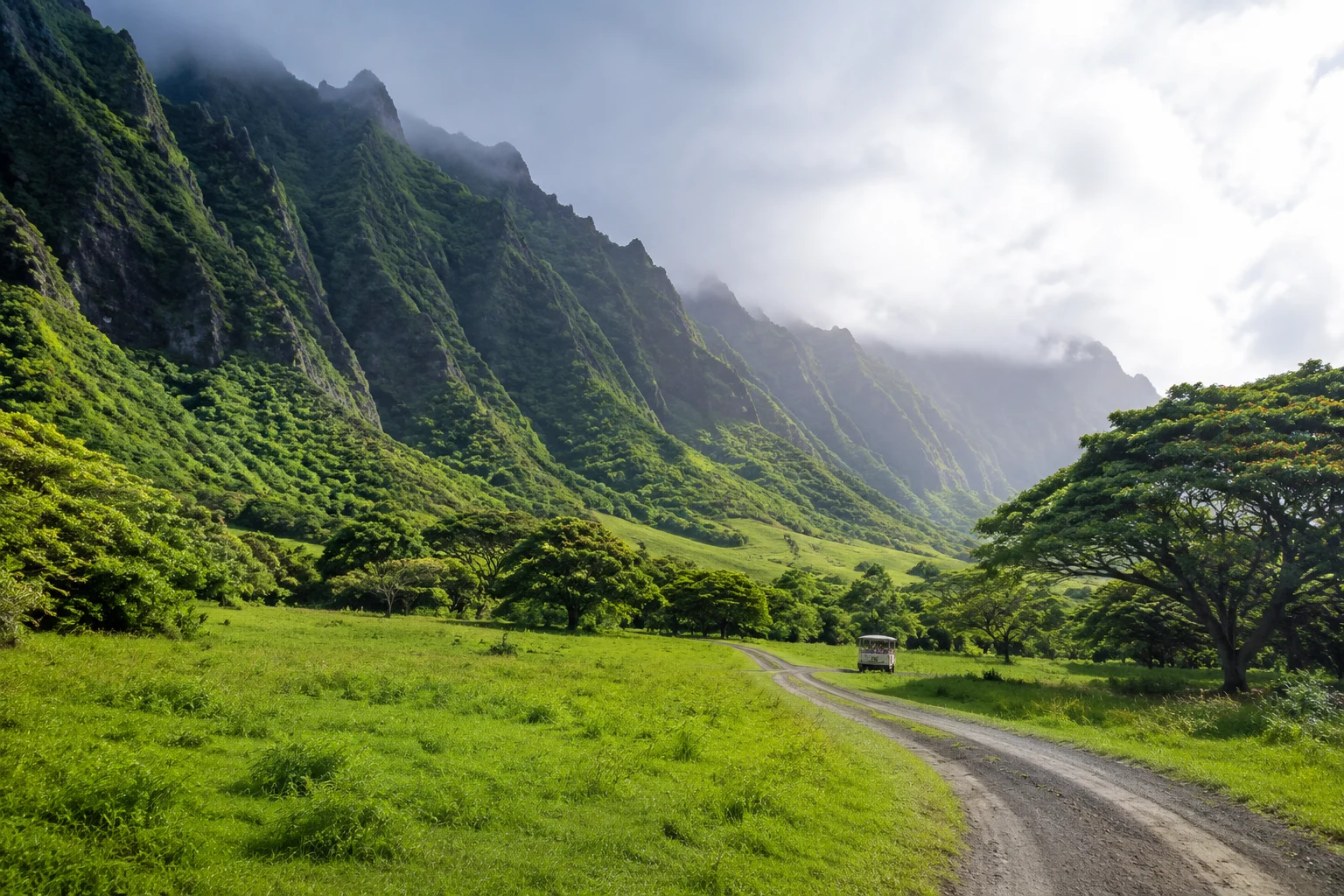
The dinosaurs have gone.
The tour buses remain.
Kualoa on Oʻahu has appeared in an extraordinary number of productions, including Jurassic Park, Jurassic World, Kong: Skull Island, Jumanji, Godzilla and 50 First Dates. The ranch says more than 200 film and television productions have used its landscapes since the 1950s.
Its sharp green ridges are particularly good at playing prehistoric wilderness.
Hollywood understood this immediately.
So did the dinosaurs.
What makes Kualoa worth including, though, is the story beneath the movie business. The property contains places of considerable Hawaiian cultural and historical significance, including an ancient fishpond, and operates as a private nature reserve as well as a working ranch and filming location. Hawaiʻi's official tourism site emphasises that visitors should understand the landscape through its environmental and cultural history, not solely its cinematic résumé.
There are several ways to explore, but the straightforward Movie Sites & Ranch Tour currently runs about 90 minutes and is listed at $59.95 before tax.
Go for Jurassic Park.
Pay attention when the conversation moves beyond dinosaurs.
Salzburg, Austria: The City That Cannot Escape The Sound of Music
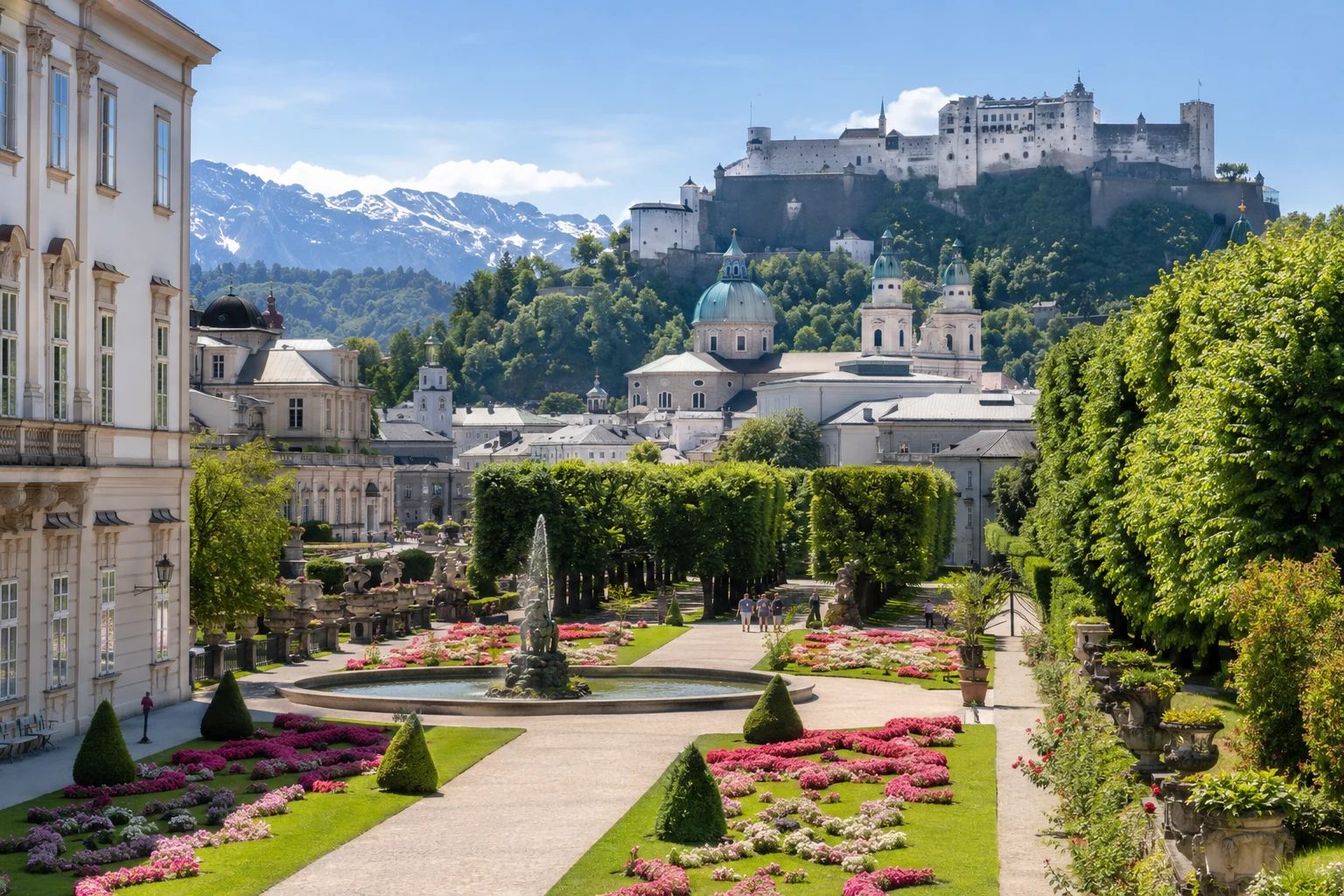
There are places that embrace their cinematic fame.
Salzburg has had something closer to a 60-year negotiation with it.
The Sound of Music was filmed around the Austrian city in locations including Mirabell Gardens, Nonnberg Abbey, Leopoldskron Palace and the Felsenreitschule. Salzburg tourism says hundreds of thousands of fans still visit annually because of the film.
That is impressive longevity for a movie released in 1965.
It is also one of the best destinations for travellers who want to find film locations without spending the entire day on a dedicated tour. Several scenes were shot around the historic centre, and locations can be linked on foot or by bicycle. The surrounding lake district contains others.
There is also a useful cultural twist: international visitors sometimes assume The Sound of Music occupies the same position in Austrian culture that it does in America and Britain.
It doesn't.
Which makes Salzburg a particularly entertaining example of cinematic tourism: the visitors often know the Hollywood version of the city's story better than the people living there care to.
Salzburg is leaning further into that curious relationship, with a new Sound of Music Museum announced for Hellbrunn from autumn 2026.
The Strange Pleasure of Recognising Somewhere You've Never Been
Movie-location travel plays a small trick on memory.
You reach the place for the first time, yet something feels familiar.
A Scottish viaduct curves exactly as expected. A Jordanian façade emerges from a canyon you've somehow already walked through. Hills in New Zealand appear to belong to characters who never existed.
Then reality begins replacing the film.
Petra becomes Nabataean rather than Indiana Jones. Glenfinnan becomes Jacobite as well as magical. Skellig Michael belongs once again to monks, seabirds and the Atlantic.
And perhaps that is the real reason the best movie locations are worth visiting.
You go looking for somewhere imaginary.
You come back remembering the real place.
Ready to Write Your Own Scene?
From Hobbiton to Wadi Rum, we design private itineraries around the locations that move you — with the guides, timing and access that turn a film location into a real journey.
Or reach us directly on WhatsApp — we respond fast and love a good filming-location itinerary.
Talaria Voyages is a Canadian-based luxury travel atelier, IATA TIDS registered (Code: 96235812), serving travellers worldwide.